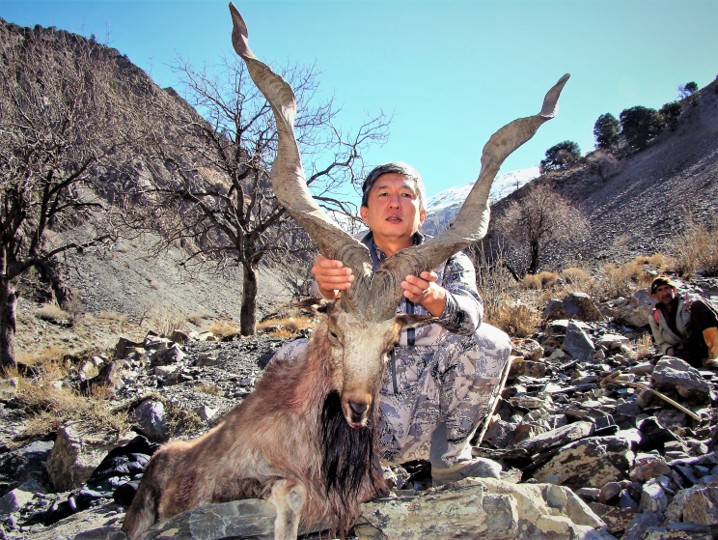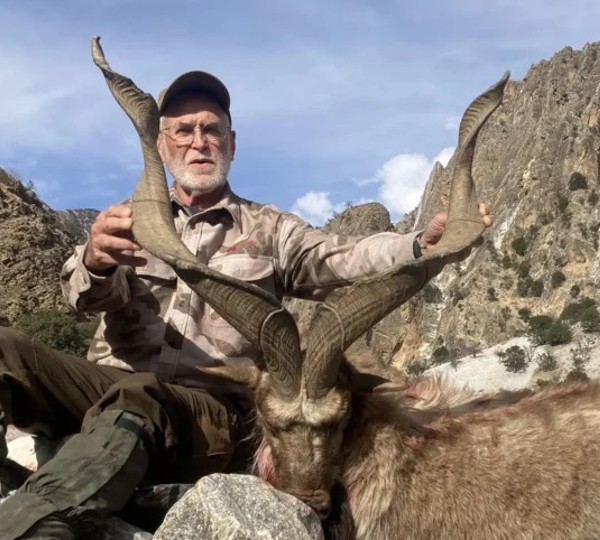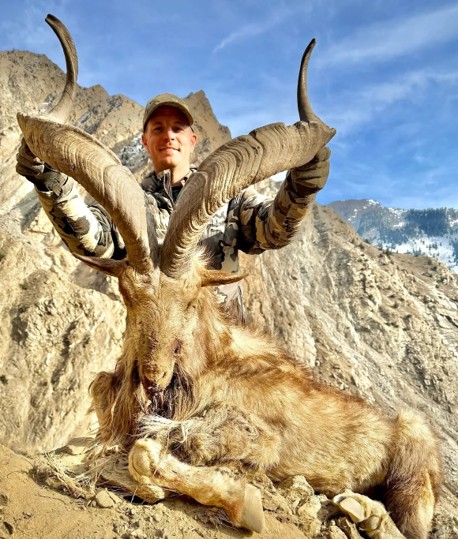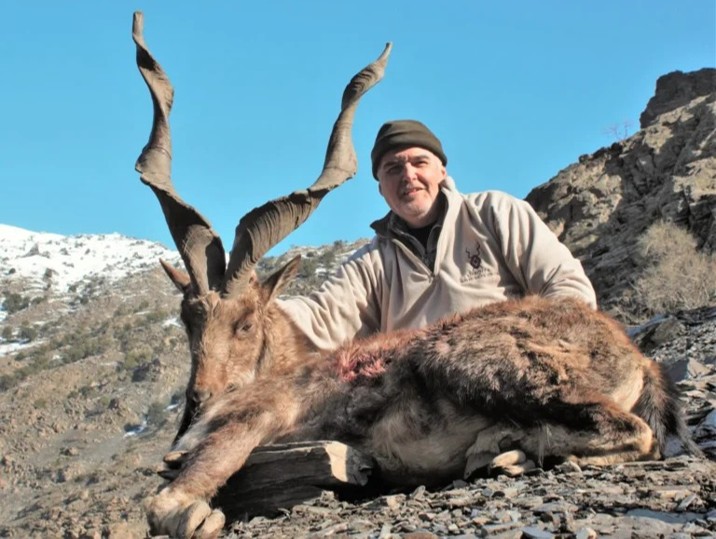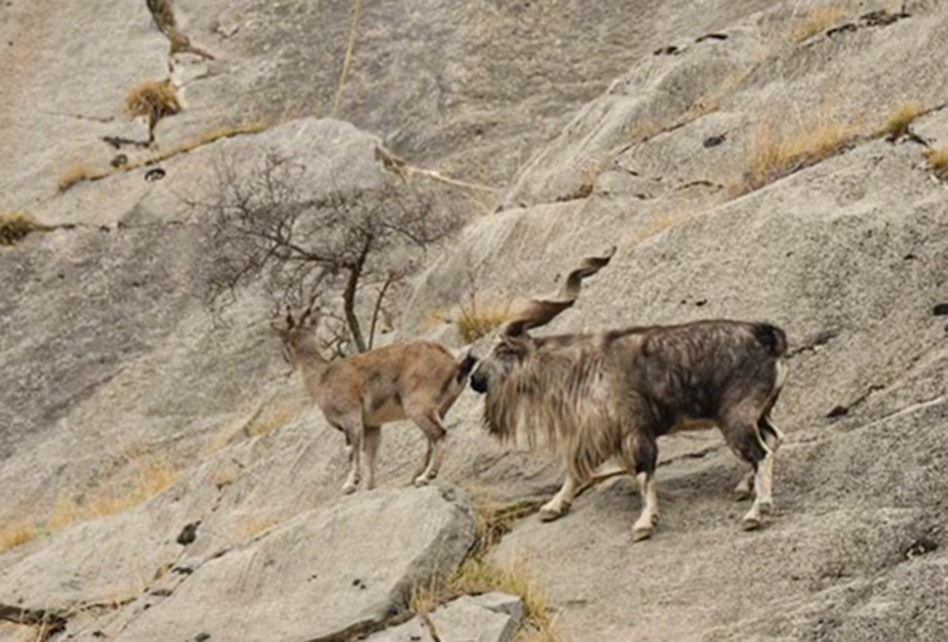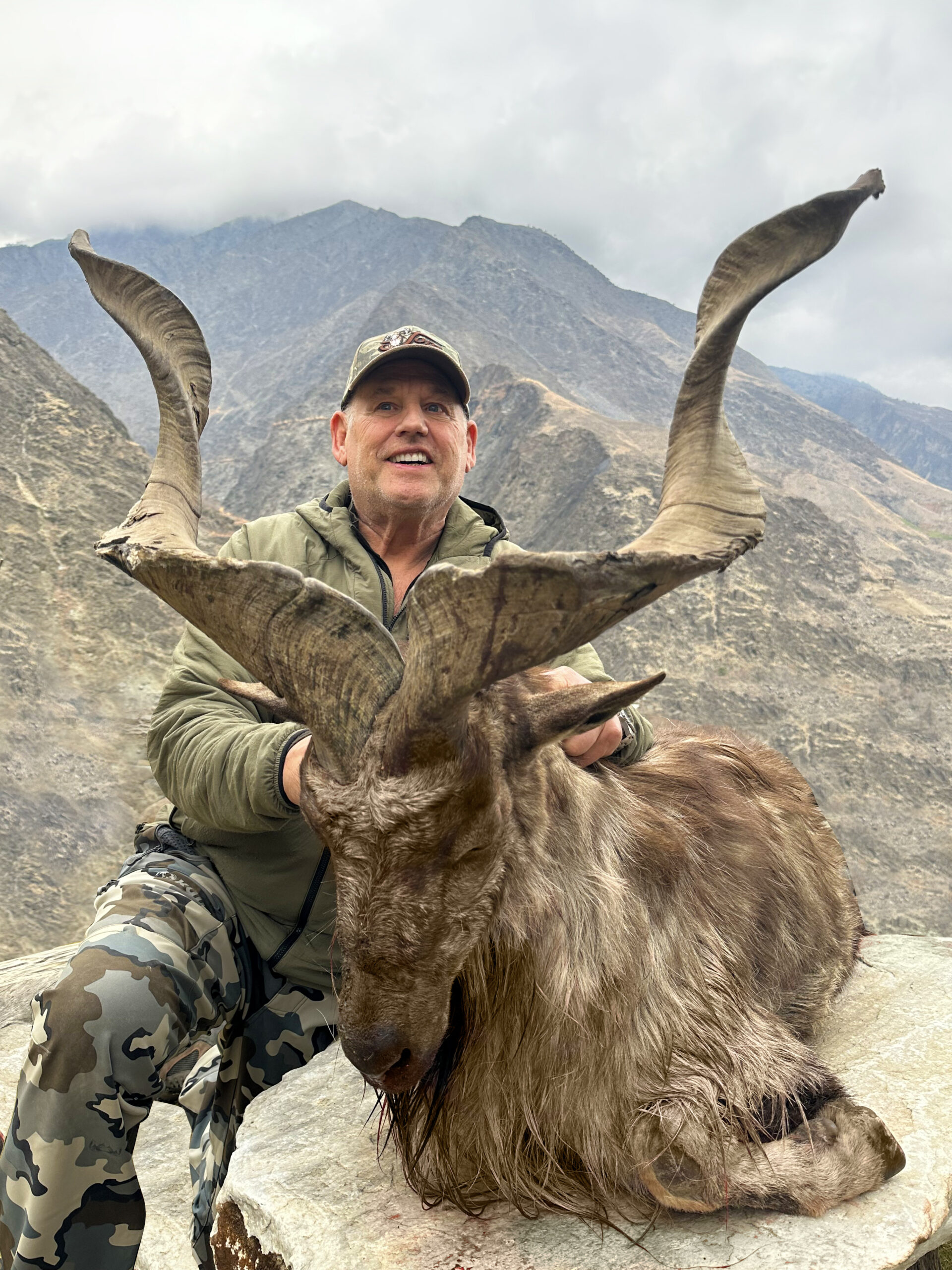
Kashmir Markhor
Pakistan is the only country offering legal, CITES‑approved hunting for Kashmir Markhor (Capra falconeri cashmiriensis). Only 4 exportable permits are currently available annually.
However, from time to time, non-exportable permits are available at significantly less cost. But the overall cost to hunt a non-exportable will still exceed six figures.
Specie / Hunt Description
Kashmir Markhor inhabit a narrow, fragmented band of the western Himalayas. Their range is dramatically different from the dry limestone of Kugitang or the open cliffs of the Sulaiman Range.
The Chitral District (Khyber Pakhtunkhwa) is regarded as the most famous and productive markhor landscape. The Markhor inhabit steep, forested valleys with mixed oak, pine, and juniper. Excellent specimens exceed 40 inches, with exceptional specimens reaching 50 inches. Very high record book specimens have reached 60 inches.
Getting There: Hunters will be met in Islamabad and assisted with firearms clearance before taking a 1-hour connector flight to Chitral. The hunting areas vary between a 40-minute to 2-hour drive from Chitral Airport.
Hunt Strategy: Most Kashmir are found between (6,000–10,000 ft.) in elevation. Terrain varies from forested slopes, cliffs, broken rock, mixed with heavy vegetation. This is a spot-and-stalk hunt, but with far more stalking than spotting. Glassing from ridgelines at first and last light are the most productive times to spot them. Shots typically range from (150–300 yds.), closer than other markhor hunts due to vegetation and broken terrain.
Season: November through March.
Length of Hunt: 4-5 hunting days plus 2 in-country travel days.
Options: Various combination hunts with Kashmir Markhor are possible – Sindh Ibex, Blanford Urial, Punjab Urial, Afghan Urial, Chinkara Gazelle, and other Markhors.
These species are found in different areas across the country and our expert team on the ground in Pakistan arranges a custom logistical plan for seamless permits and transport to all the relevant areas to be hunted.